1423 Anzac Ave, Kallangur QLD 4503
Dental emergency? (07) 3886 0933 ★★★★★ 4.8 | 170 reviews
Home / Services / Sleep Apnoea and Snoring

Sleep apnoea and snoring care in Kallangur

Snoring Mouthguards
and Sleep Apnoea

A custom snoring mouthguard, made for your mouth

Loud snoring can wear down your sleep and the sleep of the person next to you. At Kallangur Dental Surgery we make custom snoring mouthguards, also called mandibular advancement splints, for people who snore and for adults whose doctor has diagnosed mild to moderate obstructive sleep apnoea. We work with your GP or sleep physician, because sleep apnoea is a medical condition that needs a medical diagnosis first. Left untreated it is linked with high blood pressure, heart disease, stroke and type 2 diabetes, so it is worth having checked.

  • Custom mandibular advancement splints made from impressions of your teeth
  • Fitted after a sleep study or GP assessment, never instead of one
  • A quiet, portable option for people who find CPAP hard to live with
Kallangur Dental Surgery clinic
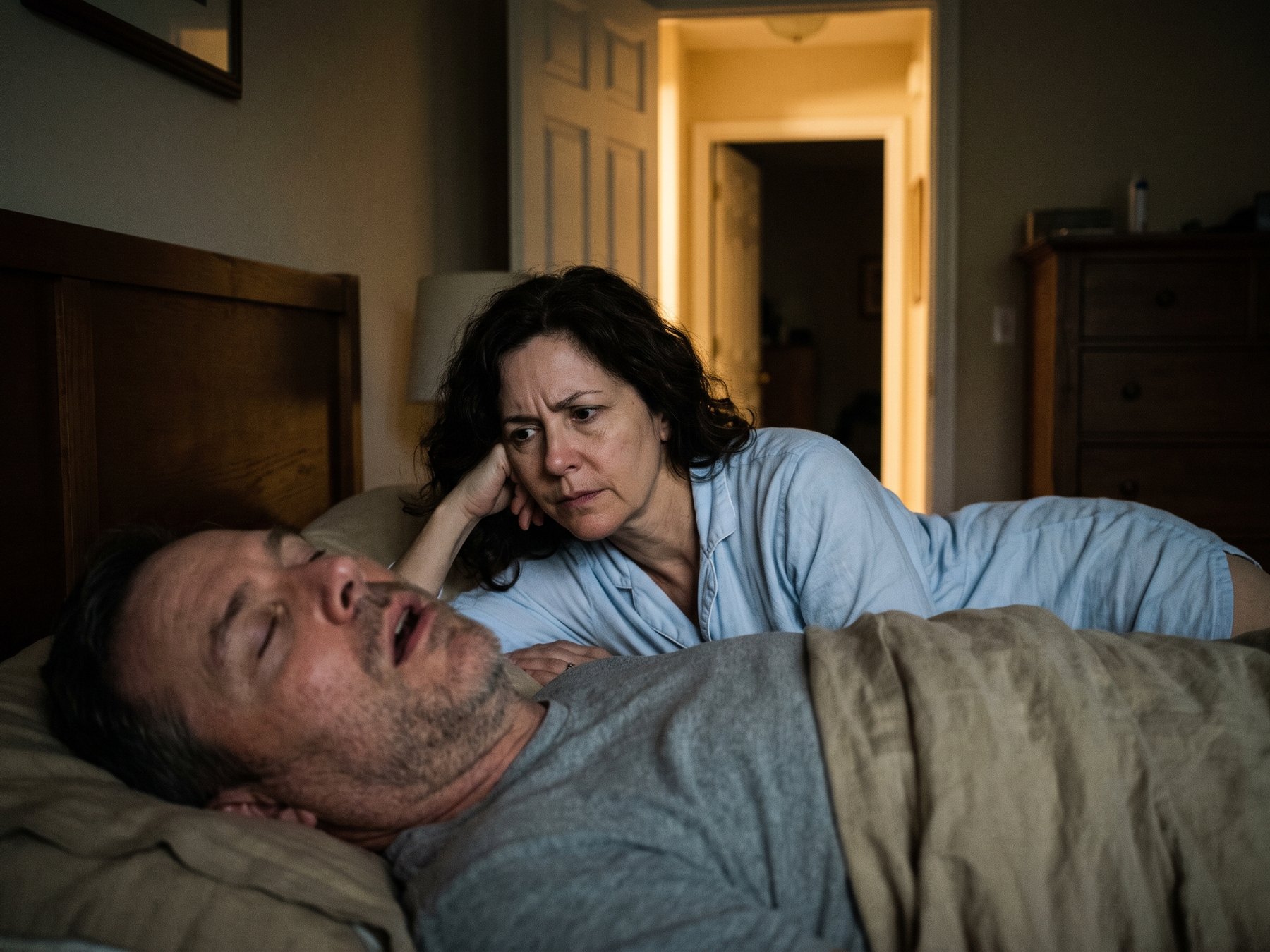
Woman lying awake at night watching her snoring husband, worried about pauses in his breathing

Understanding it

What is sleep apnoea, and how is it different from snoring?

Snoring is the sound of soft tissue in the throat vibrating as air squeezes past. In obstructive sleep apnoea (OSA), those tissues, along with the palate and tongue, collapse far enough to narrow or block the airway altogether. Breathing stops for a few seconds, oxygen drops, and the brain briefly wakes you to start breathing again. This can happen dozens of times an hour, and most people have no memory of it by morning.

OSA is the most common form. There are two others:

  • Central sleep apnoea, where the brain does not send the right signal to the breathing muscles.
  • Mixed sleep apnoea, a combination of obstructive and central apnoea.

A dental appliance is designed for the obstructive kind. Plenty of people snore without having sleep apnoea, and some people with sleep apnoea barely snore, so a proper assessment comes before any treatment.
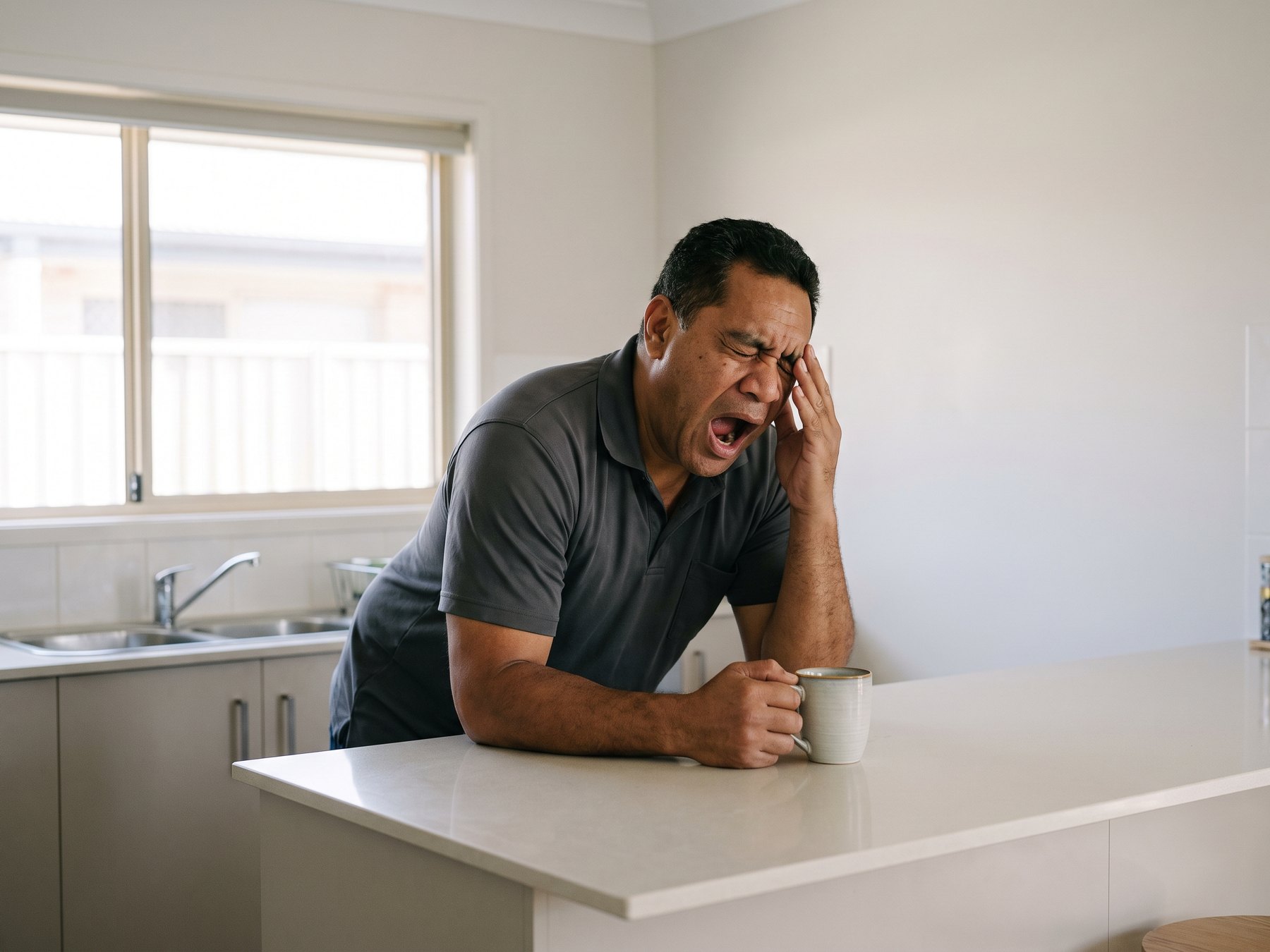
Tired man yawning and rubbing his temple over a morning coffee, a common sign of sleep apnoea

Signs to watch for

Symptoms of sleep apnoea

Often a partner notices first. Common signs include:

  • Loud snoring most nights
  • Gasping, choking or pauses in breathing during sleep
  • Waking with a headache or a dry, sore throat
  • Tiredness and dozing off during the day
  • Irritability, poor concentration or memory lapses
  • Grinding or clenching your teeth at night (bruxism)

OSA is more common in men and in adults over 40, but it can affect anyone. Your dentist may also spot clues at a check-up, such as worn teeth from grinding, a set-back lower jaw or a crowded airway. If any of this sounds familiar, raise it with your GP or with us at your next visit.

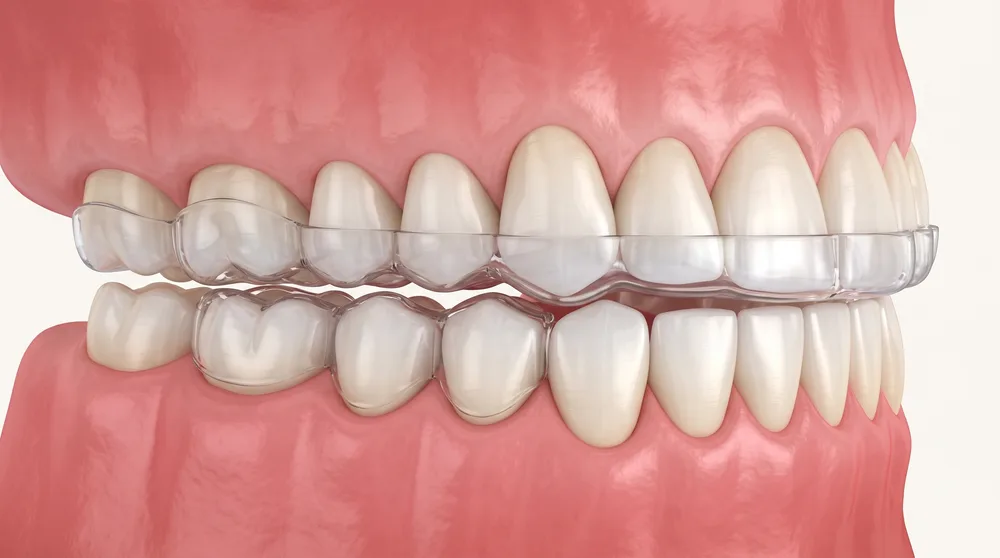
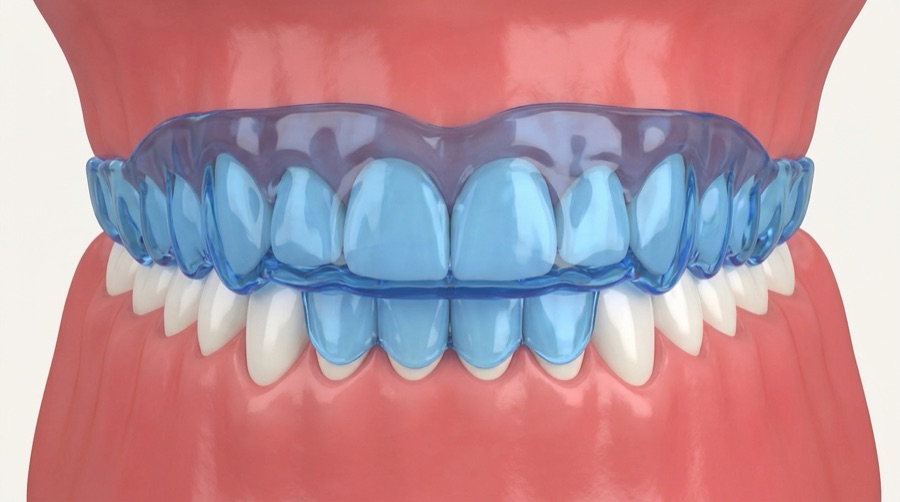
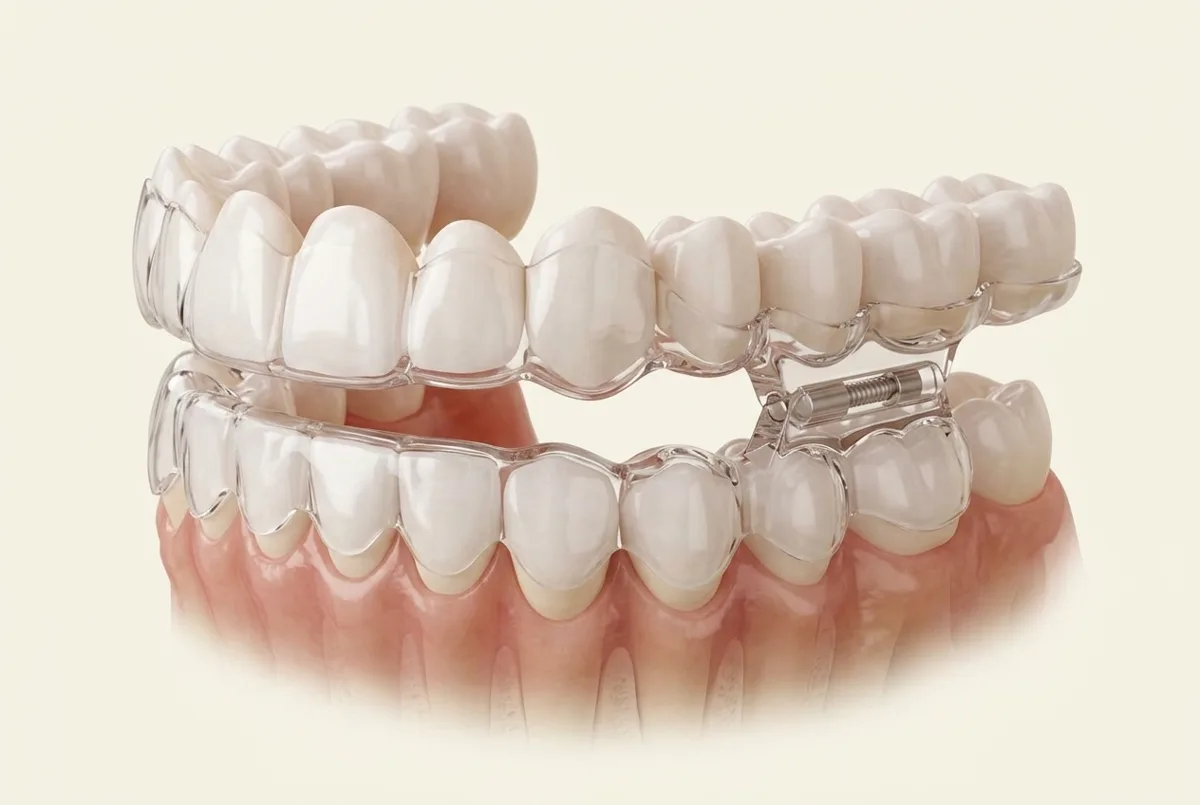
Illustration of a custom mandibular advancement splint worn over the upper and lower teeth

How it works

The mandibular advancement splint: a sleep apnoea dental appliance

A mandibular advancement splint is two slim trays, one over the upper teeth and one over the lower, linked so the lower jaw rests slightly forward while you sleep. Moving the jaw forward a few millimetres draws the tongue and soft tissues away from the back of the throat, which helps keep the airway open.

Because the splint is made from impressions or scans of your own teeth, it stays in place through the night and can be adjusted a little at a time until it works for you. It needs no power, makes no noise and packs into a small case for travel. For many patients it reduces snoring, and it is a recognised oral appliance for sleep apnea (spelt apnoea in Australia) when the diagnosis is mild to moderate OSA. It can also be an option for more severe OSA when CPAP cannot be tolerated, with your sleep physician's agreement. Individual results vary.

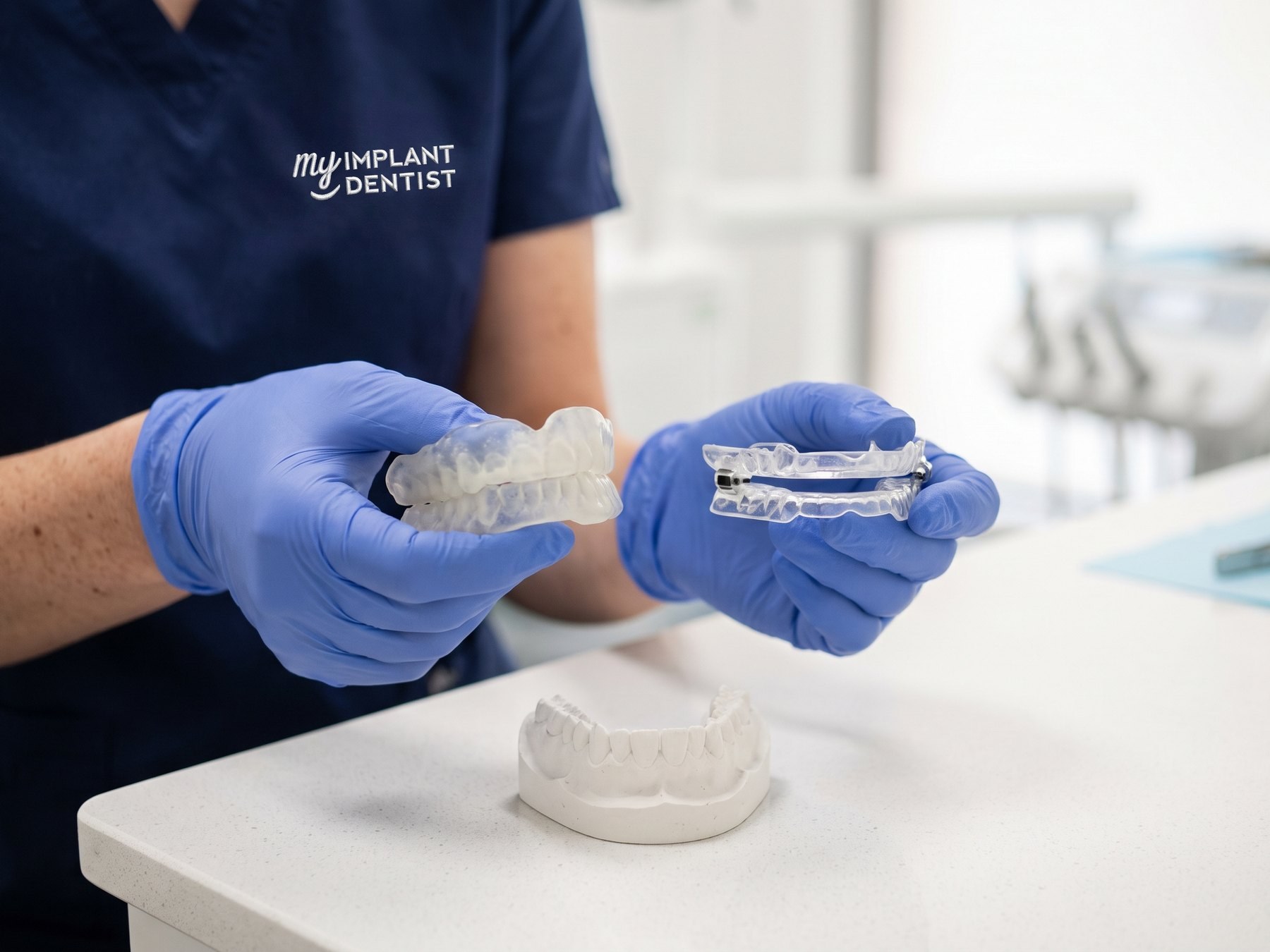
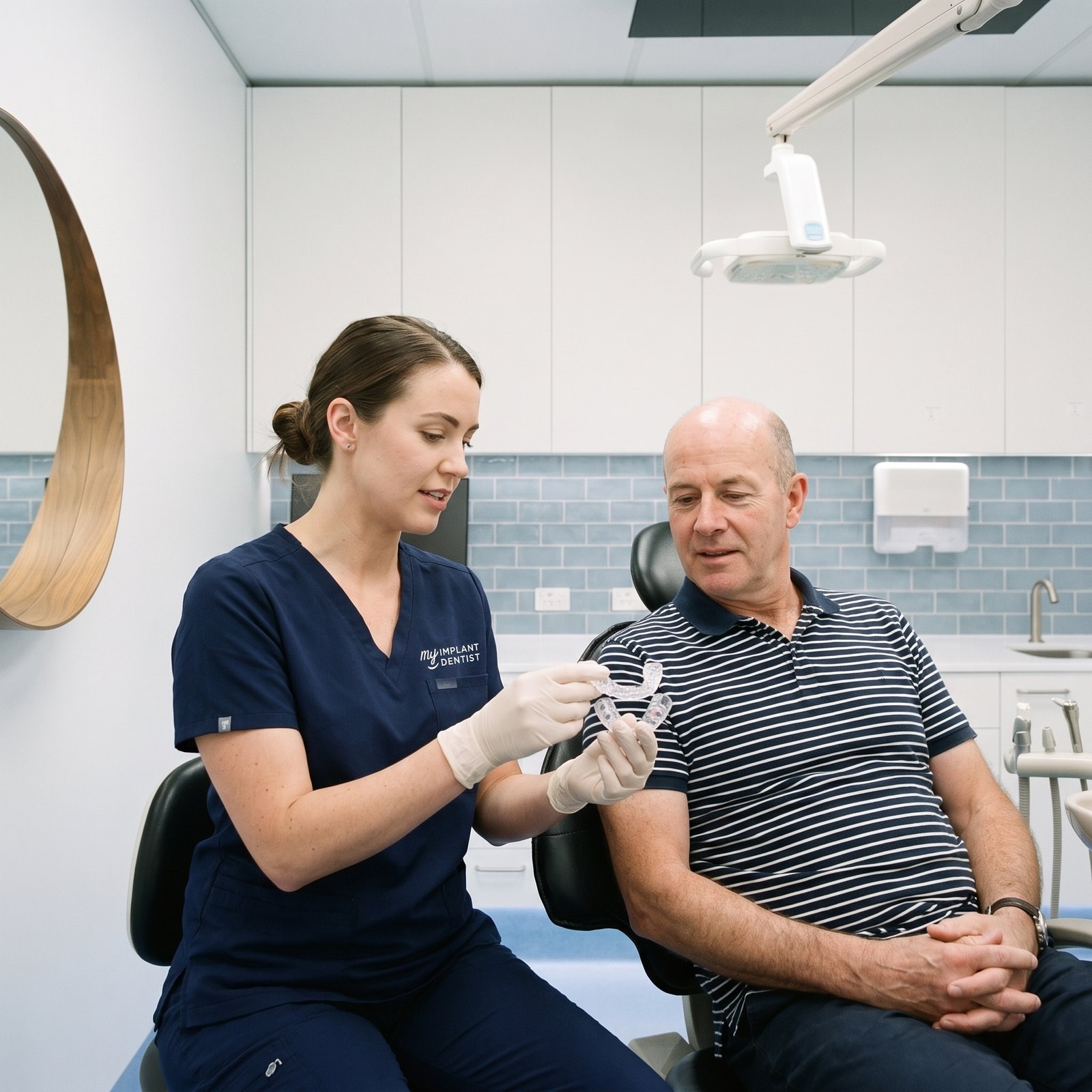
Dentist holding a bulky chemist boil-and-bite guard beside a slim clear custom snoring splint

Custom or chemist

Custom splint or a chemist snoring mouth guard?

Boil-and-bite snoring guards from the chemist cost less up front, but they are bulky, often loosen during the night and cannot be set to a measured jaw position. Some people find them uncomfortable enough to stop wearing them within weeks, and a poorly fitting guard can put strain on the jaw joints.

A custom splint is thinner, fits your teeth closely and is adjusted in small steps by your dentist, with reviews to check your bite and jaw joints. If you have a sleep apnoea diagnosis, a custom device made and monitored by a dentist is the appropriate choice.

Man winding down with a book in bed as part of a healthy sleep routine

The bigger picture

Snoring treatment alongside CPAP and lifestyle changes

A splint is one of several ways to manage snoring and sleep apnoea, and the right mix depends on your diagnosis:

CPAP. A mask and small pump deliver steady air pressure to hold the airway open. It is the standard treatment for moderate to severe OSA. It works well when worn, although some people struggle with the mask or hose.

Oral appliance therapy. The custom splint described above, suited to snoring and mild to moderate OSA, or to people who cannot tolerate CPAP.

Lifestyle. Losing excess weight, stopping smoking and cutting back on alcohol in the evening can all reduce snoring and apnoea.

Sleeping position. Some people have far fewer breathing pauses when they sleep on their side.

Jaw and tooth alignment. Where crowding or a narrow bite plays a part, orthodontic treatment such as clear aligners may be discussed.

If CPAP is working for you, keep using it. If it is not, speak to us and your sleep physician about whether a splint could help.

How it works

From snoring to a better night's sleep

Your GP or sleep physician, you and your dentist each play a part. This is how it usually works at Kallangur Dental Surgery.

01

Talk to your dentist

We ask about your sleep and symptoms, then look at your teeth, jaw joints and bite to see whether a splint is likely to suit you. Dentists do not diagnose sleep apnoea, so if you have not been assessed we will suggest you see your GP.

02

Sleep study

Your GP or a sleep physician can organise a sleep study, which is often done at home. It shows whether you have sleep apnoea, how severe it is and which treatments are suitable.

03

Impressions and fitting

We take impressions or scans of your teeth and your splint is made to fit them. At the fitting appointment we check comfort, set the starting jaw position and show you how to wear and clean it.

04

Reviews and adjustments

Over the next few weeks we adjust the splint step by step, and keep an eye on your teeth and bite at review visits. Your doctor may recommend a follow-up sleep study to check how well it is working.

Related care

Related care in Kallangur

Snoring and sleep apnoea often come with other dental problems. These services may help too.

New patients welcome

New to Kallangur Dental?

Book our new patient offer today to receive:

  • Comprehensive oral examination
  • Removal of calculus - first appointment
  • 2 bitewing X-rays (if required)
  • Topical remineralisation (fluoride)
  • Oral cancer screening
  • Treatment planning

*Terms, conditions and item codes apply. Please contact us for full details.

$199 Check-Up, Clean and X-Rays Select “New Patient Offer” when booking.

Good to know

Sleep Apnoea and Snoring - frequently asked

Can a dentist help with sleep apnoea?

Yes, but as part of a team. A dentist cannot diagnose sleep apnoea, which is done by a doctor through a sleep study. Once you have a diagnosis, a dentist can make and adjust a custom oral appliance, and at check-ups can spot signs such as grinding that may point to a sleep problem.

How does a mandibular advancement splint work?

It holds your lower jaw slightly forward while you sleep. That pulls the tongue and soft tissues away from the back of the throat, which helps keep the airway open and can reduce snoring and breathing pauses. Your dentist adjusts the position gradually until it is comfortable and effective.

Do I need a sleep study first?

If you have symptoms of sleep apnoea, yes. A sleep study, arranged through your GP or a sleep physician, confirms whether you have sleep apnoea and how severe it is. That decides whether a splint, CPAP or another treatment is the right choice. For simple snoring without other symptoms, talk to your GP about whether a study is needed.

How much does a snoring mouthguard cost?

A custom oral appliance for obstructive sleep apnoea at Kallangur Dental Surgery generally starts from $1,800, depending on the device and how many adjustments are needed. You will get a written estimate before anything is made. Many extras policies contribute towards custom appliances, and we can claim your rebate on the spot through HICAPS.

Is a custom splint better than a chemist snoring guard?

A custom splint is made to fit your teeth and adjusted by a dentist, so it tends to be slimmer, stay in place and be easier to wear every night. Chemist guards are a one-size approach that cannot be fine-tuned, and they are not a suitable treatment for diagnosed sleep apnoea.

Are there different types of sleep apnoea?

There are three. Obstructive sleep apnoea, the most common, is caused by the soft tissue at the back of the throat collapsing. Central sleep apnoea happens when the brain does not signal the breathing muscles properly. Mixed sleep apnoea is a combination of both. Oral appliances are used for the obstructive type.

What are the risk factors for sleep apnoea?

OSA is more common in men and in adults over 40, but anyone can have it. Other risk factors include carrying extra weight, smoking, alcohol, sedative medicines, a family history and certain jaw and airway shapes. Central sleep apnoea is more often linked to heart and neurological conditions.

Is sleep apnoea dangerous?

It can be. Untreated sleep apnoea is linked with high blood pressure, heart failure, stroke and type 2 diabetes, and daytime tiredness raises the risk of accidents on the road or at work. It can also affect anaesthesia and some medicines, so tell your doctor if you know or suspect you have it.

Can sleep apnoea be cured?

It depends on the cause. For some people, losing weight or treating a specific blockage makes a large difference, while others manage it long term with CPAP or an oral appliance. The aim is steady, restful sleep and lower health risks, and your sleep physician can explain what to expect in your case.

Your next step

Ready to sleep more quietly?

Whether you snore, have a sleep apnoea diagnosis or have given up on CPAP, our Kallangur team can talk you through whether a custom splint could help.

  • Splints made from impressions of your own teeth
  • Care arranged with your GP and sleep physician
  • Review visits to keep the splint comfortable
  • Health fund rebates claimed on the spot through HICAPS
We Are Preferred Providers For
MedibankHCFBupaWestfund
Kallangur Dental Surgery is part of the My Implant Dentist Group